
Ethical Elephant Sanctuaries in Koh Samui
By KohTrip · Monday, 16-11-2026
Are there ethical elephant sanctuaries in Koh Samui?
Yes. The word "sanctuary" is not regulated in Thailand, so any operator can use it, but a few places on the island do meet a clear standard. The programmes we offer all share the same basics: no riding, no performances and no bullhooks in view of visitors.
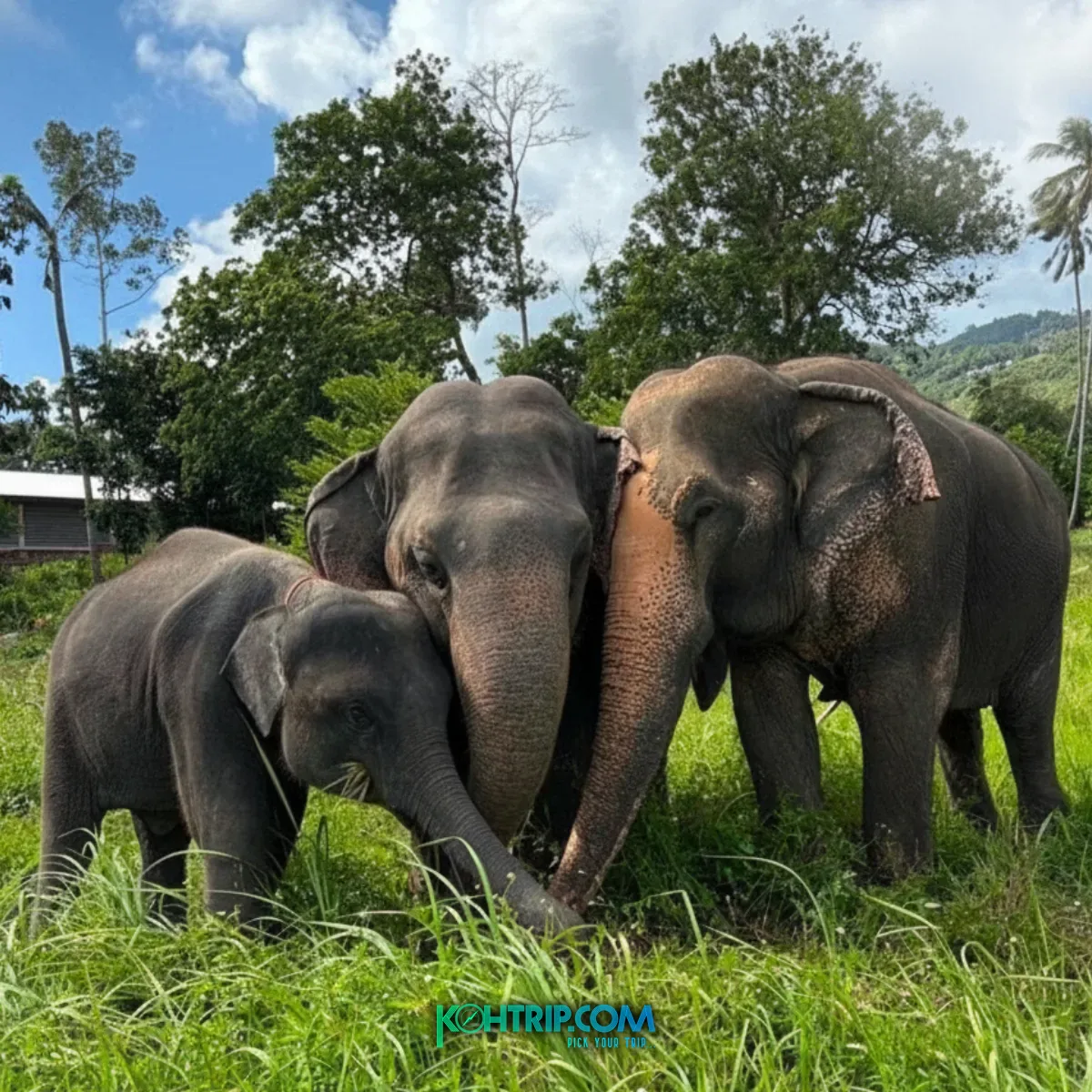
What should "ethical" mean?
- No riding, ever. An Asian elephant's spine is not built to carry weight on its back. Damage builds up quietly over years, even with light riders and short rides.
- No tricks or shows. Painting and football routines are usually taught with fear or food withholding. A real sanctuary does not stage them.
- No hooks in public areas. If you see a bullhook during your visit, treat it as a red flag.
- Freedom to move. During visiting hours the elephants should roam in their paddocks and forest, not stand chained.
Most elephants at Samui sanctuaries are former working animals, retired from logging, riding camps or street begging. Logging was banned in Thailand in 1989, which left many working elephants without a job.
How do the programmes differ?
All of them are no-riding visits. What changes is how close you get and how long you stay.
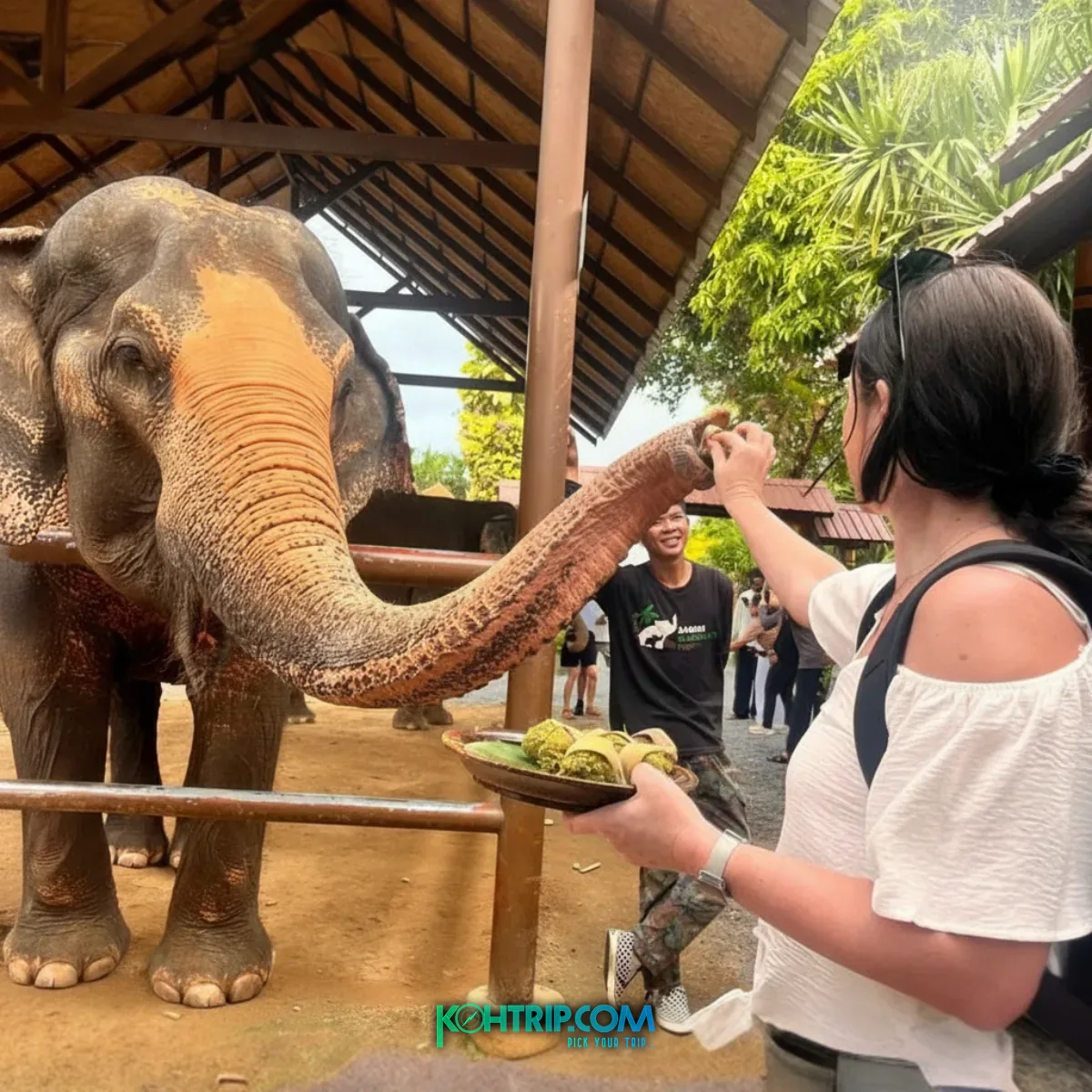
- Hands-on, with learning. Prepare food, feed the elephants, walk with them and see an on-site exhibit on elephant history. Good for families with children who want to understand, not just take photos. See the half-day elephant programme.
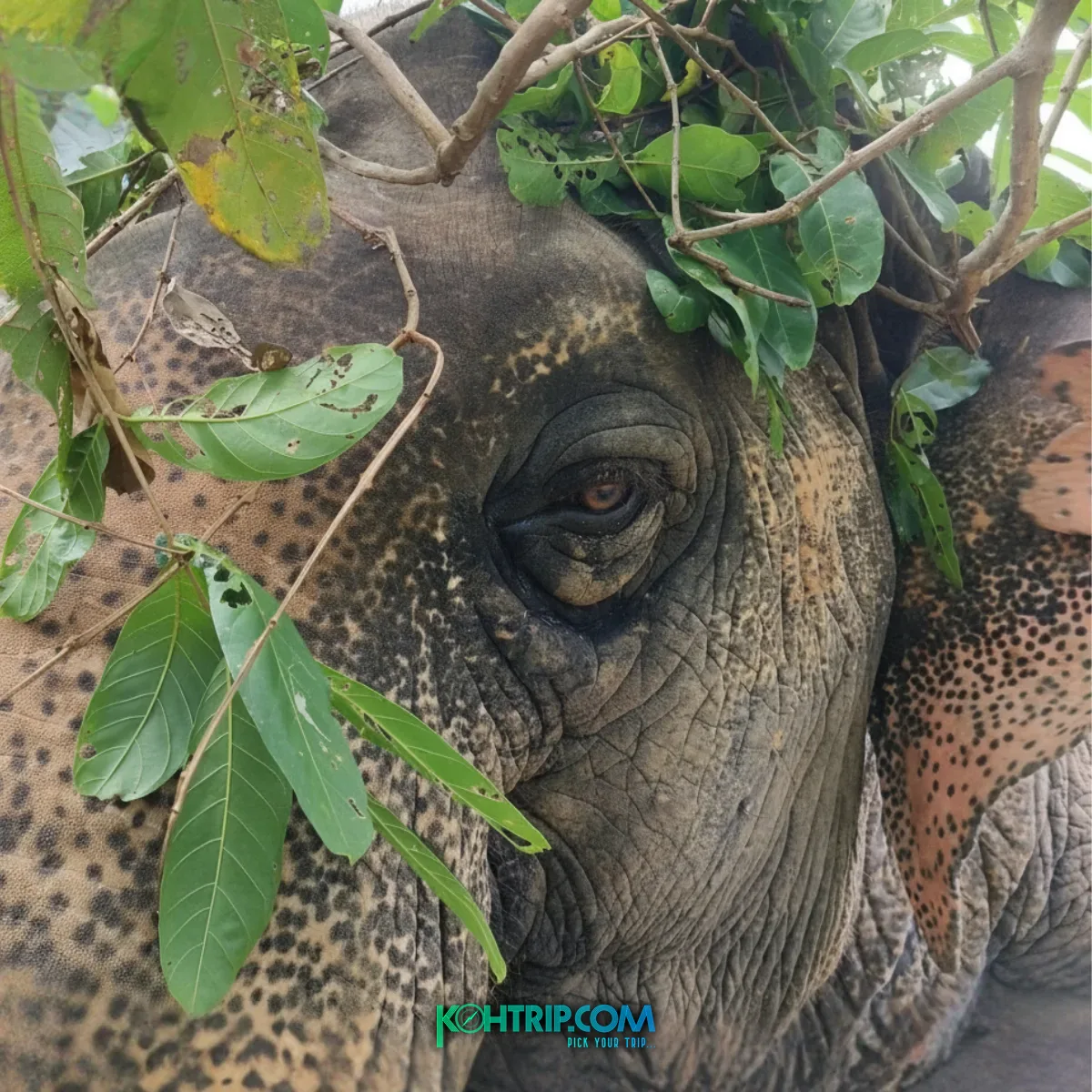
- Observation first. A quieter visit on forested land in the north, with feeding and a walk around the grounds. See the half-day sanctuary programme.
- Elevated walkway. You watch the elephants from above rather than standing beside them. This suits travellers with limited mobility or very young children. See the skywalk elephant tour.
Why is a very cheap elephant tour a warning sign?
Looking after an elephant is expensive: vets, a large area of land, up to around 150 kg of vegetation a day for an adult, and fair pay for the mahouts. A beach-tout offer far below what sanctuaries charge usually saves money by cutting one of those things, or by selling rides.
Questions to ask before you book
- Is riding offered, even for a short photo?
- Are there shows or tricks?
- Are the elephants free to move during visiting hours?
- Does the programme include hotel transfer, and how long do you actually spend on site?
- Do they tell you where the elephants came from?
Practical tips
Choose a morning session in the hot season, wear clothes that can get muddy and bring sunscreen. Prices and current availability are on each tour page.
What a good visit looks like
You should see elephants eating, walking, resting and bathing at their own pace, with staff who know each animal by name and history. Visitor numbers should be low enough that the animals are not crowded. You may be asked to keep a respectful distance, to wait while an elephant moves away and not to chase photos. That is a good sign, not a limitation.
Which one should you choose?
Families with older children usually enjoy the hands-on programme with an exhibit. Travellers who prefer minimal contact can pick the observation-led visit. If walking on uneven ground is hard, or you are travelling with a toddler or a pushchair, the elevated walkway is the easy option. Check the tour pages for timing, inclusions and availability.
Prices today, read from KohTrip's live price list on Monday, 16-11-2026:
- Half Day Elephant Spa: from THB 3,240 per person
- Half‑Day Elephant Sanctuary Feeding Program: from THB 3,000 per person
- Skywalk Elephant Tour: from THB 3,130 per person
Browse every tour on KohTrip's Koh Samui page.
Last updated: Monday, 16-11-2026.
The trip this answer is about
Half Day Elephant Spa